Preventing Sports Related Dental Injuries

Preventing Sports Related Dental InjuriesDid you know that one third of dental injuries are sports related? It’s true. So how can you protect your teeth and mouth in contact sports? The answer is a custom fit sportsguard/mouthguard, which can help you to avoid injury and in turn, dental visits. Sportsguards not only protect your teeth, but your tongue, lips, face and jaw too. A 2014 study in an issue of General Dentistry showed that a custom-made, properly fitted, pressure-laminated mouthguard may also reduce the incidence of sports-related concussions.

Mouthguards are used in sports including football, basketball, lacrosse, water polo, and ice hockey among others. For more information on custom-fit sportsguards please call our office at 949 640 0300. 
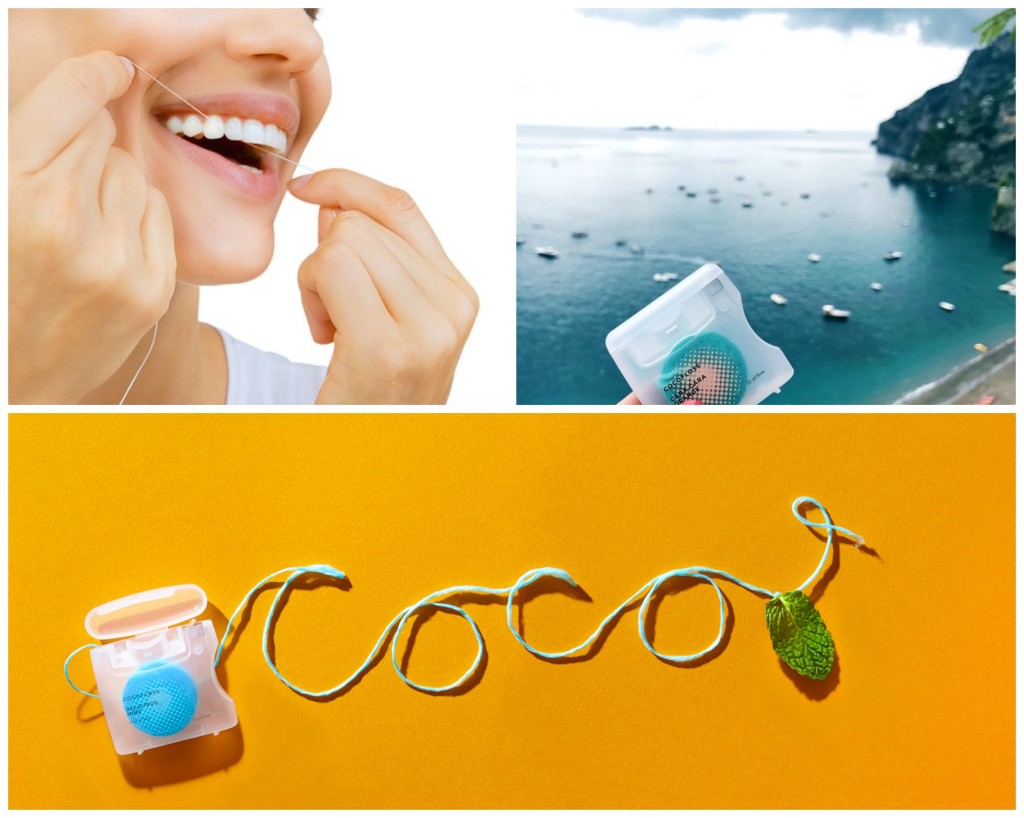
The Importance of Flossing

floss image

Just in case you’re thinking that flossing is so yesterday, it’s not. Flossing helps to prevent cavities and gum disease and is an essential part of your daily dental routine. 

According to the American Dental Association, “Brushing is very important but you can’t get the bristles in between the teeth. Floss pulls bacteria and plaque and food that smells bad.” The ADA recommends brushing twice a day and flossing once a day.

And to make flossing even easier, we’ve discovered a new floss we love called Cocofloss –– a super cleansing, high performance dental floss that’s soft, effective, and easy to use. They call it floss paradise. We call it smart.

Whatever floss you choose, make sure it’s a daily part of your routine. Your teeth and gums will thank you. 

Too white. Too large. Too perfect.

woman smiling teethSometimes perfect isn’t perfect — especially when it comes to teeth.
We’ve all seen them before: the too white, too large, and too perfectly artificial. Teeth that seem to arrive first. Obvious and unfortunate. Chiclets. So what’s to blame? Perhaps it’s the thought that bigger and whiter are better. But when it comes to teeth, that couldn’t be farther from the truth.

Today’s ideal porcelain veneer is customized and natural looking with subtle flaws that make them look just a bit better than the real thing. The ideal porcelain veneer is not thick, not overly contoured and not opaque in color but rather they’re natural looking, translucent in color, and seamlessly match the rest of your teeth. Created by professional dental ceramists, these natural porcelain veneers provide a balance of white and natural that leave people wondering: did they or didn’t they?

To read more on the subject, check out this interesting NY Times article here. And for more information on natural-looking veneers, call us.


Dr. Kimberly’s Top Five

Processed with VSCO with f1 preset

When it comes to teeth, ever wonder what your dentist’s favorites are? Check out the whats and the whys of Dr. K’s top five below.

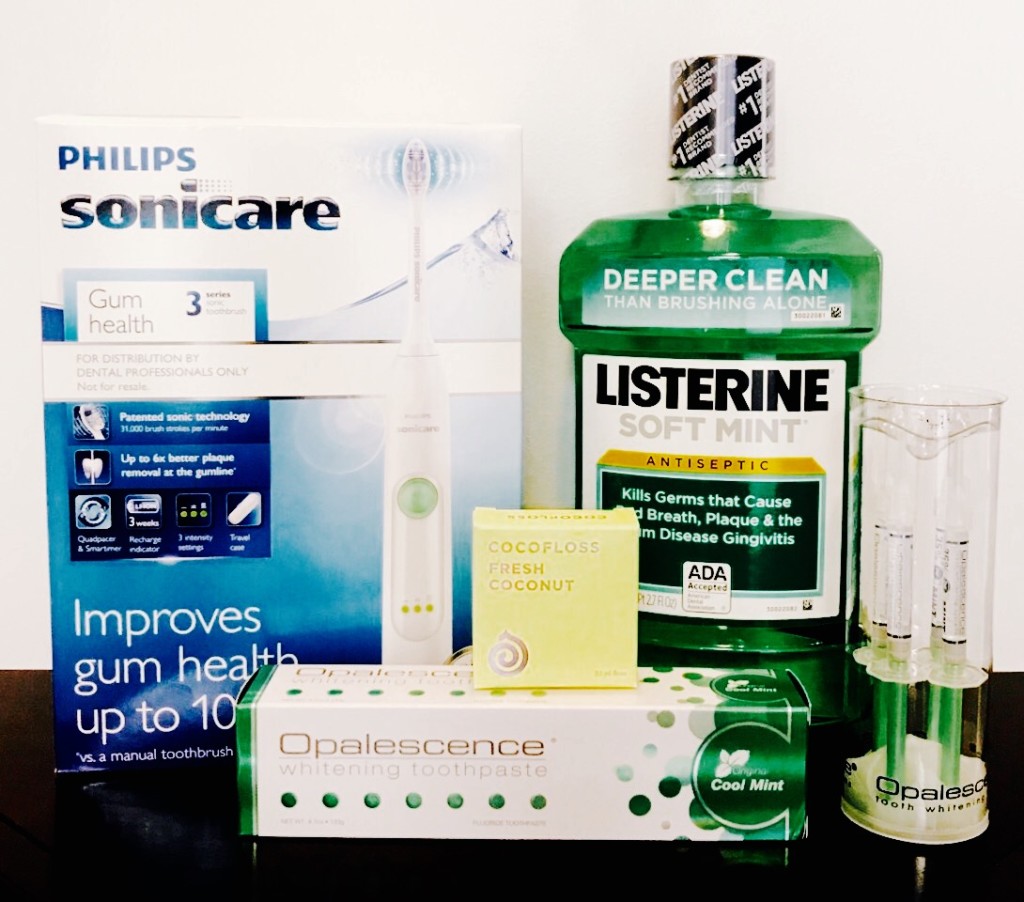
1) Sonicare toothbrush: Why? It’s a superior clean, removing plaque and keeping both teeth and gums healthy. No regular toothbrush can compete. She brushes with it twice daily for 2 minutes each time (and after lunch with a regular toothbrush). 

2) Listerine Soft Mint: Why? It reduces plaque, bacteria, and keeps your breath fresh. She rinses with it twice a day. 

3) Opalescence toothpaste: Why? It’s an anti-cavity, surface stain removing toothpaste that tastes as good as it works. She uses it daily.  

4) Opalescence teeth whitening gel: Why? Because it’s the best teeth whitener around. She uses it to touch up whitening after a cleaning.

5) Cocofloss: Why? It’s softer and easier to manage than regular floss and the flavors are fairly delicious. She uses it daily. 

Toothbrush Tips

Ever wonder about the best way to care for your toothbrush? It’s pretty simple, really, and you’ll be in good shape if you follow these basic steps: 

41140056 - tooth brush in glass isolated on white background1) No sharing. Don’t get us started on the enormous bacterial exchange that happens when you share a toothbrush. Just say no. 
2) Rinse thoroughly. After brushing, rinse your toothbrush well.

3) Store upright. Store the toothbrush in an upright position to allow it to dry thoroughly. Separate it from other toothbrushes to avoid cross-contamination.

4) Avoid closed containers. Don’t store toothbrushes in closed containers that will promote bacterial growth; a toothbrush needs the open air. 

5) Replace every 3 months. Toothbrushes wear out, bristles become frayed with use, and their ability to clean effectively diminishes. The best rule is to replace a toothbrush every 3-4 months. 

Show Your Teeth Some Love

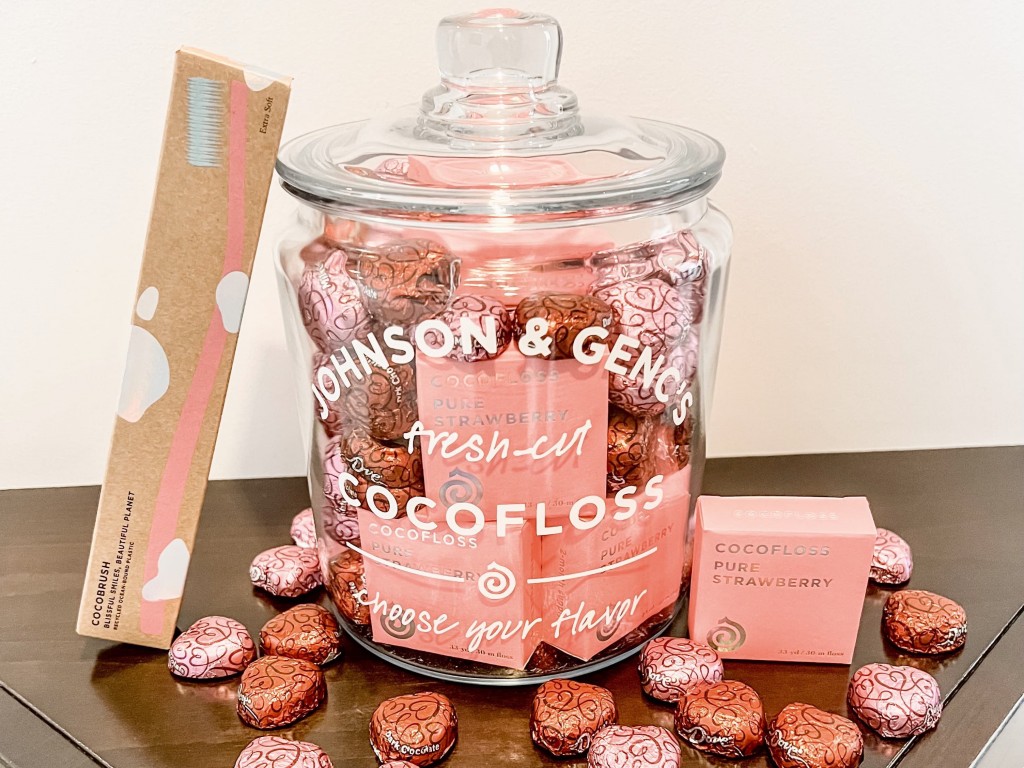
IMG_1365This Valentine’s Day, Show your teeth some love with Cocofloss.

Why do we LOVE Cocofloss? Because it’s ultra-cleansing and unlike ineffective “gliding” floss, Cocofloss features a textured, loofah-like weave. As you floss, these soft strands expand to whoosh away sticky plaque and cavity-causing bacteria.

Flossing basics: 1) floss once a day; 2) gently glide the floss up and down, rubbing it against both sides of each tooth. As the floss reaches your gums, curve the floss at the base of the tooth to form a C shape. Regular flossing will reduce gum disease and bad breath by removing plaque.

If you haven’t tried Cocofloss, please ask us for a sample the next time you’re in. Cocofloss is available online at cocofloss.com or through our office.

Warmest wishes

merry 2

Vampire Veneers

IMG_2442Custom made porcelain vampire veneers –– for the ghoul with everything.

Wishing you a happy Halloween!

(Creative custom veneers made by lab technician Jackson Aoki at Johnson & Genc Dentistry.)

Fact vs. fad: activated charcoal

102311430_sIt seems like common sense that putting something messy and black on your teeth would only serve to make them the opposite of white. So what gives with all the recent chatter about activated charcoal and whiter teeth?

According to the Journal of the American Dental Association, “There is no evidence that shows dental products with charcoal are safe or effective for your teeth.” Dr. Kimberly explains it this way, “Bleaching your teeth is all about changing the inherent color of the teeth. If you’re using a product that’s rough on the enamel –– like activated charcoal –– you can wear the enamel away causing your teeth to be actually more porous, sensitive, and look more yellow. And once the enamel is damaged, it’s permanent.”

So in short, stick with an ADA-approved bleaching system from your dentist’s office … and save the charcoal for the barbecue.

White, Whiter, Whitest

IMG_5332

Whitening toothpaste, whitening strips, whitening gels. The dizzying array of choices in the toothpaste aisle is intimidating, to say the least. So which to choose, what is best?

The quick answer is this: the products at your local drugstore all have similar whitening ingredients to what’s available at your dentist’s office, the main one being peroxide. The difference between what you can buy at the store and what your dentist provides is a matter of concentration. The drug store products all have a very low percentage of active ingredient, between 1 – 2%, versus up to 35% in the products available from your dentist’s office. Professional teeth whitening at the dentist’s office is a more concentrated peroxide product, and therefore more effective. 

So which is better? Dr. Kimberly recommends using 35% Opalescence bleaching gel in custom trays, made by your dentist and worn at home for 30 minutes a day until the desired shade is achieved. On average, it takes 10-14 days and the results are the best out there.

For more on teeth whitening, check out this Washington Post article here. And to stay white, skip stain-causing foods such as coffee, tea, and red wine –– and avoid fad teeth rinses like lemon juice, apple cider vinegar, and activated charcoal because they will damage and erode the enamel of your teeth. Whatever product you purchase, make sure it has the ADA seal, which means it’s safe and effective. For questions regarding teeth whitening, please call our office at 949 640 0300.